
Jaeger-LeCoultre is delighted to present the sixth capsule of The Collectibles, a meticulously vetted selection of 12 museum-grade timepieces unveiled in London and available to collectors worldwide. The sixth capsule marks the first presentation of The Collectibles in London, an important hub for watch enthusiasts and collectors.
Reverso: The Emblematic Reversible Watch
The seven Reverso models offered in the sixth Collectibles capsule collection illustrate the depth and breadth of the Reverso’s evolution from its introduction in 1931 until the beginning of the early 21st century. While Reverso was originally conceived for a sport – created to withstand the shocks of the polo field – it was quickly adopted by tastemakers from many walks of life, continuously evolving without compromising its identity to become recognised as an icon of Art Deco design. In the 1930s, LeCoultre & Cie distinguished itself with black dials, contrasting with the dominant silver and white dials in the watch industry. These black dials were hailed as ‘the dial of the future’ in the 1934 Spécialités Horlogères catalogue, which was the very first product catalogue from the association between Jaeger and LeCoultre. Reserved for only a select number of early Reverso references, these high-legibility dials reinforced the model’s resolutely modern character and are notably featured on three timepieces from this capsule: Reverso 1931, Reverso 1931 Dame and the Doctor’s Reverso.
The Reverso 1931 features this bold black dial with a railroad minute track and elongated trapezoidal indexes. It is fitted with the Tavannes Calibre 063, a pragmatic early solution while Jaeger-LeCoultre developed its own shaped movements from 1933 onwards. This Reverso is offered with a hand-crafted black calfskin leather strap.
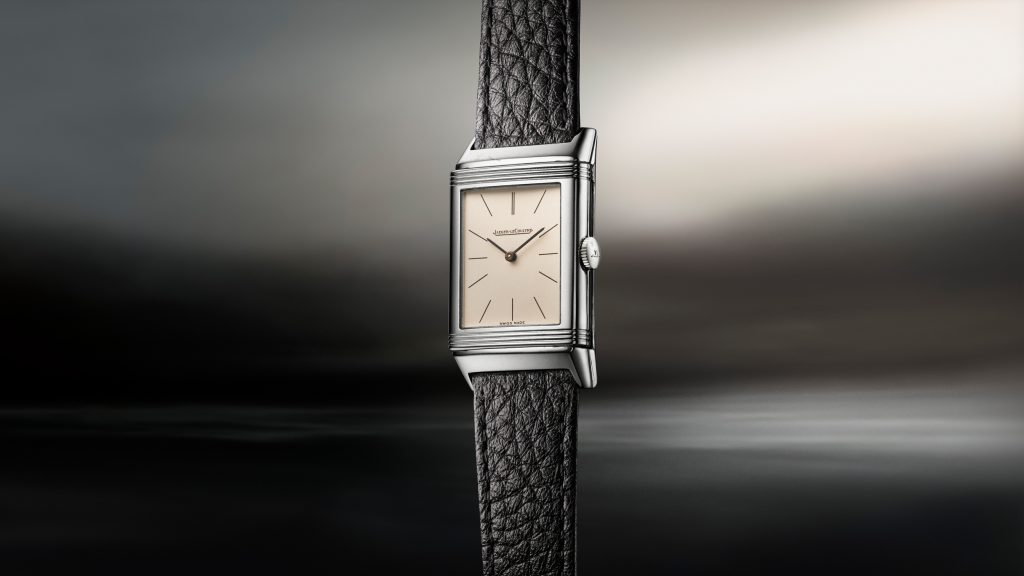
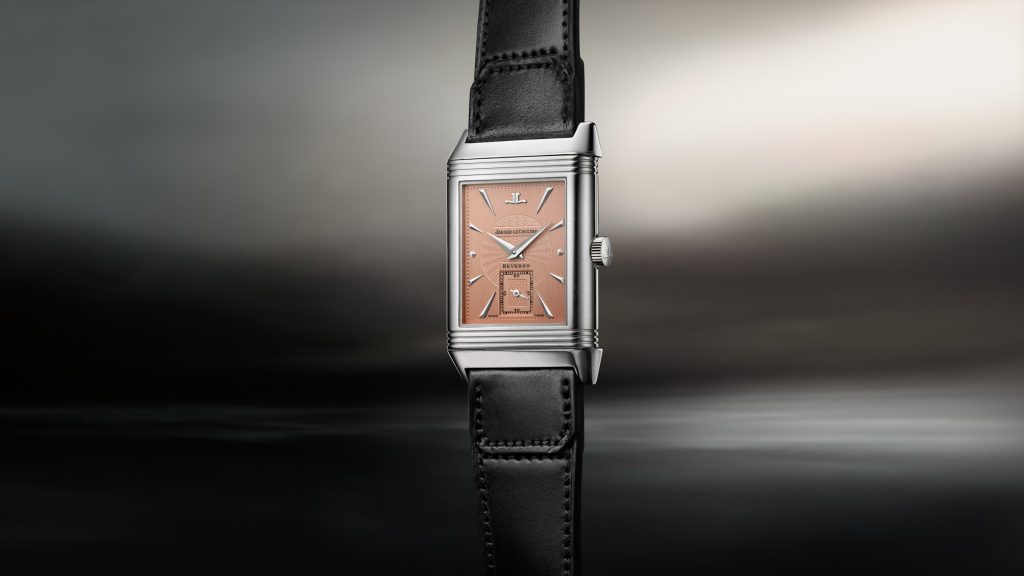
Cased in steel and powered by the Tavannes Calibre 051, the Reverso 1931 Dame demonstrates how quickly the model evolved for different wearers. Adapting the same design language, its dial replaces the men’s minute track with bracket-like corner markers and refined Art Deco corners with trapezoidal indexes, details echoed today in the Reverso One collection. This Reverso is also offered with a hand-crafted black calfskin leather strap.
Set in a steel case, the 1938 Reverso Central Seconds, later nicknamed the Doctor’s Reverso, houses the Manufacture Calibre 411 and reflects the growing functional sophistication of the model. Designed with practicality in mind, its central seconds display features five-second intervals aligned with the elongated hour markers for optimal readability, making the precise measurement of pulse rates particularly easy. A highly practical tool for doctors of the time, it soon earned the enduring nickname “Doctor’s Reverso”. This timepiece is offered with a hand-crafted black calfskin leather strap.
A two-tone Reverso from 1941 pairs steel with 18K yellow gold (750/1000), an innovative combination conceived to enhance durability while preserving the elegance of gold. Its 18K 18k yellow gold (750/1000) case bears the eagle head hallmark for French gold. Powered by the Manufacture Calibre 438, it features a small-seconds display at six o’clock, a configuration introduced in 1933 that became one of the defining signatures of early Reverso design. This timepiece is offered with a hand-crafted light-brown calfskin leather strap with cream-colored stitching.
A 1972 Reverso Corvo, produced in just 200 pieces, marks a pivotal chapter in the history of the Reverso. When changing tastes favoured functional watches, in a post-war era that prized practicality over elegance and amid the quartz crisis, Giorgio Corvo recognised the enduring appeal of the design. In 1972, he acquired the Maison’s final 200 unused Reverso cases and fitted them with the mechanical Calibre 840. Said to have sold out within a month to Italian clients, the Reverso Corvo proved that enthusiasm for the model had never faded and paved the way for its revival. Featuring a silver dial housed in a steel case, it remains powered by the manual-winding Calibre 840. This timepiece is offered with a hand-crafted black calfskin leather strap.
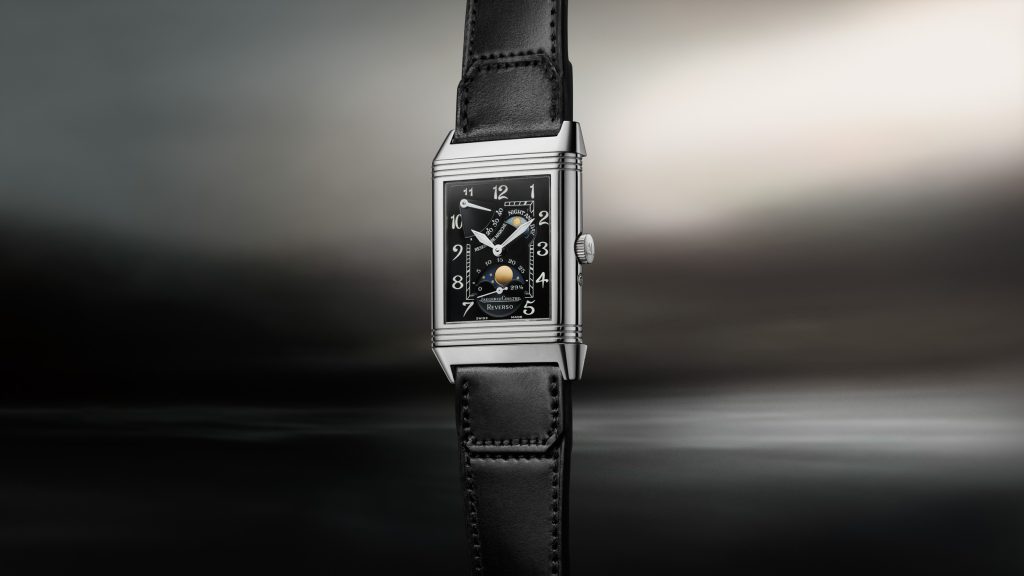
Set in an 18K white gold case (750/1000), a Reverso Sun Moon from 2000 reflects the renewed enthusiasm for mechanical watchmaking that emerged in the 1990s, when Jaeger-LeCoultre introduced a new generation of complication calibres for the Reverso, fitting them in cases with sapphire crystal backs to showcase the mechanical complexity. Equipped with the manual-winding Calibre 823, first developed in 1999, it pairs technical sophistication with an elegant display of celestial indications. Its black dial tracks the passage of the sun through a rotating 24-hour disc, complemented by a moon-phase display at six o’clock and a power reserve at eleven o’clock. Framed by a railway minute track and Arabic numerals, the composition balances clarity with refinement, while the sapphire crystal caseback reveals the movement with its recognisable pistol bridge. This timepiece is paired with a hand-crafted black Cordovan strap by the celebrated Argentinian polo bootmaker, Casa Fagliano.
A Reverso Art Deco illustrates how the introduction of sapphire crystal casebacks encouraged a new expression of decorative craftsmanship within the collection: skeletonisation. First introduced in 1995, this 2003 example pairs an intricately hand-decorated, skeletonised interpretation of Calibre 822 with an elegant Art Deco aesthetic. Visible through the open caseback, the emblematic calibre is distinguished by blued screws and hand-engraved bridges adorned with a refined barleycorn motif. Its 18K white gold case (750/1000) frames a salmon-toned solid silver dial, where hand-guilloché patterns contrast with vertical brushing, complemented by dauphine hands and applied trapezoidal indexes. Archival records indicate that no more than ten pieces were made each month, reflecting the exceptional level of craftsmanship required for each timepiece. This timepiece is paired with a hand-crafted black Cordovan strap by the celebrated Argentinian polo bootmaker, Casa Fagliano.
The seven Reverso pieces are complemented by five watches that demonstrate the diversity of the 17 models included in The Collectibles programme. Each of the five additional watches offered in the sixth capsule represents a high-water mark for both Jaeger-LeCoultre and 20th-century watchmaking, with groundbreaking innovations that exemplify the Maison’s pioneering spirit.
The Duoplan: A Revolution on the Wrist
At the dawn of the partnership between Jaeger and LeCoultre, the Duoplan represented a genuine industry revolution. Built on two superimposed planes, the Duoplan calibre opened new creative possibilities for both companies. Invented in 1925, its rectangular two-level architecture enabled unprecedented miniaturisation by housing larger, more robust components within a compact construction. This breakthrough had a decisive impact on the design of women’s watches. It was also a revolution for LeCoultre & Cie, which, thanks to the Duoplan, transitioned from a movement and component producer to a full-fledged watch manufacturer.
Memovox: A Second Memory
In 1958, Jaeger-LeCoultre celebrated its 125th anniversary by launching three models that highlighted its expertise and the innovative character of its creations. Among them was a particularly striking interpretation of the legendary Memovox: the Memovox Parking. With a patented dial design highly recognisable thanks to its blue and white pictogramme, the Memovox Parking allows the wearer to set the alarm for a specific duration to avoid any parking ticket.
A 1958 Memovox Parking embodies a seemingly incompatible duality: elegance in 18K pink gold (750/1000) paired with purposeful functionality. Powered by the manual-winding Jaeger-LeCoultre Calibre 814, it transforms a refined dress watch into a discreet urban companion, thanks to its alarm function. The case bears the Edmond Jaeger hallmark (EJ), attesting to its Parisian craftsmanship in the Maison’s ateliers. It is fitted on a hand-crafted brown calfskin leather strap.
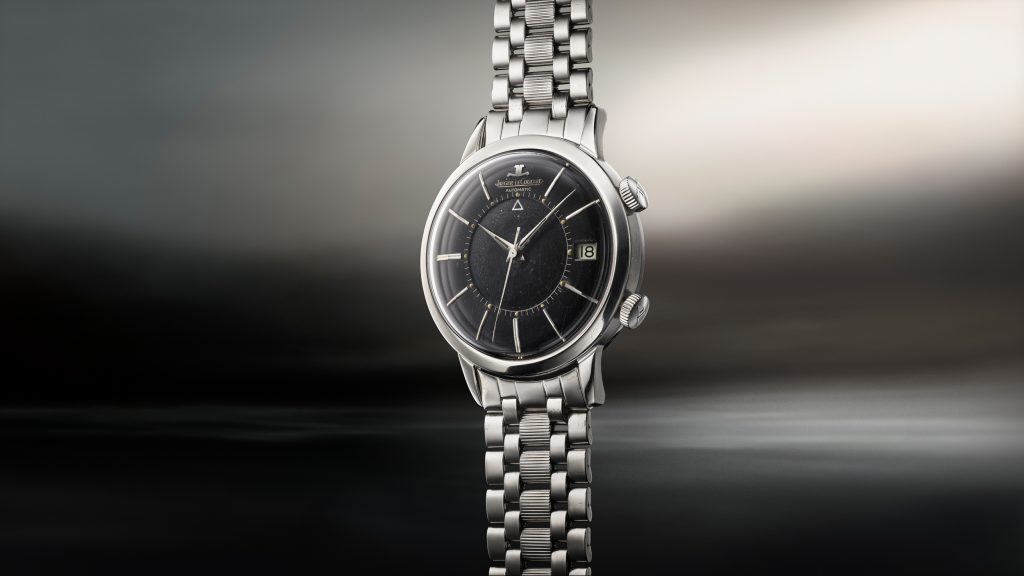
Produced in 1969, this steel Memovox Automatic Calendar, reference E855, pairs technical innovation with a strong visual identity. At the time, Jaeger-LeCoultre brought together two key advances in wristwatchmaking: the alarm complication and automatic winding. This 37 mm model features an elegant black dial with a date window at 3 o’clock and is powered by the self-winding Jaeger-LeCoultre Calibre 825.
Its distinctive character is further enhanced by its five-row bracelet made by Gay Frères and engraved with the company’s chamois hallmark. Fitted with its original Gay Frères steel bracelet, the combination with the black painted dial makes it one of the most sought-after Memovox Automatic models, crafted by the renowned Swiss specialist known for supplying the world’s most prestigious watchmakers. An additional hand-crafted black calfskin strap is also provided with the watch.
Geomatic: The Chronometer Calibre
Inspired by the legendary Geophysic, the Geomatic incorporates the best that the watchmakers from the Vallée de Joux could produce at the time. The Geomatic was developed as one of the most reliable automatic watches of its time. Highly precise and a true benchmark at its launch in 1961, it symbolises the ultimate combination of state-of-the-art technology and understated elegance thanks to its chronometer-certified movement and rich dial.
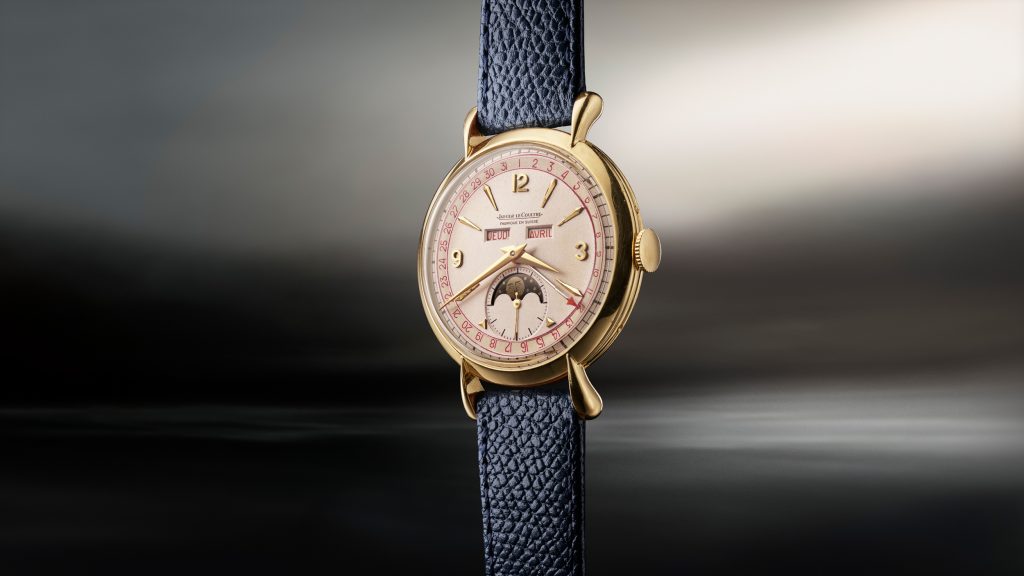
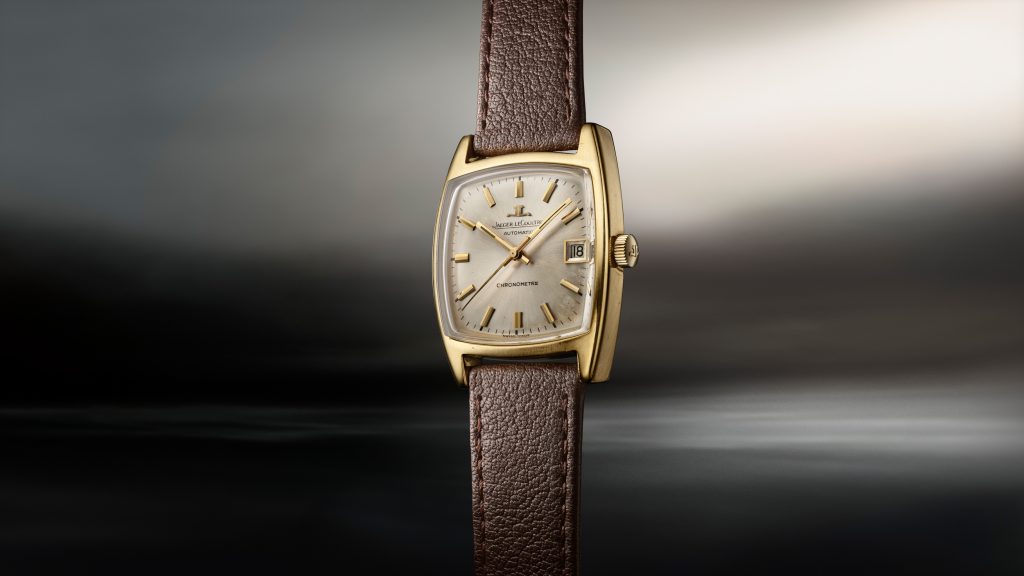
A rare Geomatic E560 from 1970, produced to just 200 pieces, is housed in an 18K yellow gold cushion-shaped case (750/1000). Powered by the automatic Calibre K883S, chronometer-certified and tested for 360 hours, it features a stop-seconds mechanism for precise time-setting and an instantaneous jumping date. This highly technical construction reflects the pursuit of accuracy at the heart of the Geomatic line. It is fitted on a hand-crafted taupe calfskin leather strap.
Each timepiece offered under The Collectibles programme is presented with an extract from the Jaeger-LeCoultre archives and a complimentary copy of The Collectibles book, as well as a new handmade leather strap chosen to complement the style of each watch, except in cases where the model has a metal bracelet. In addition, when available, the original box and papers together with the original strap or bracelet will be included.